
What are the differences between centrifugal fans and high-temperature fans?
Centrifugal fans and high-temperature fans differ in functions and application sites, with quite obvious distinctions. Therefore, customers shall make selections according to their actual requirements. Since the two types may look similar, buyers may consult manufacturers during purchase to avoid ordering the wrong equipment.
What are the differences between centrifugal fans and high-temperature fans?
The detailed differences between centrifugal fans and high-temperature fans are as follows:
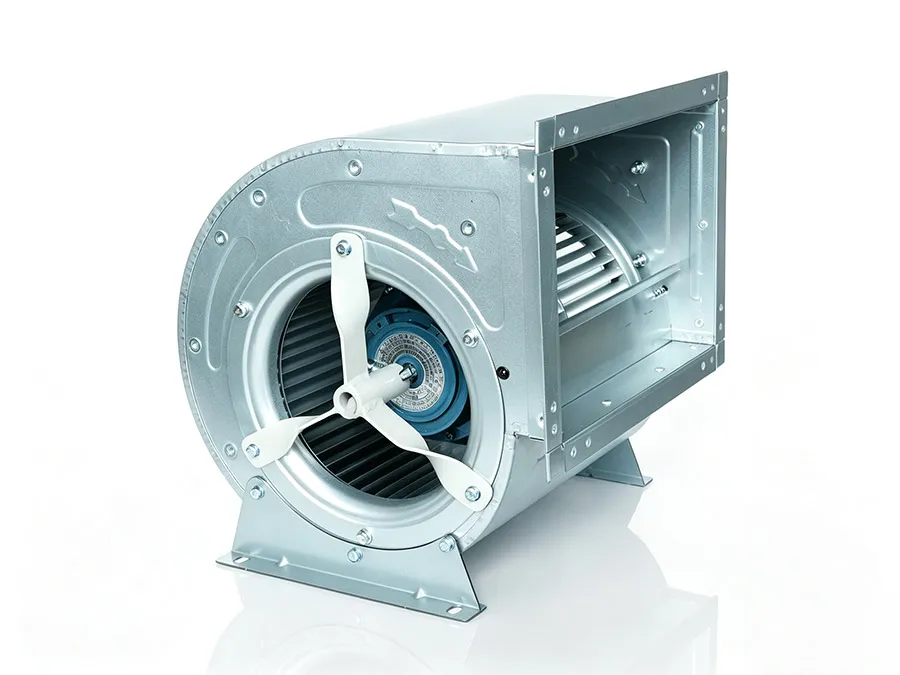
1. Centrifugal fans can be made in right-hand rotation and left-hand rotation versions. Identification standard: viewed from the motor side, the fan is right-hand rotating if the impeller spins clockwise; it is left-hand rotating if the impeller spins counterclockwise.
① Pressure rise mainly occurs in the impeller, followed by the expansion process.
② In a single-stage centrifugal fan, gas enters the impeller axially and turns radial when flowing through the impeller into the diffuser.
③ Inside the diffuser, the gas changes flow direction and decelerates. This deceleration converts kinetic energy into pressure energy.
What are the differences between centrifugal fans and high-temperature fans?
2. High-temperature fans are specially designed for high-temperature working environments, adopting materials with high temperature resistance and pressure resistance.
① High-temperature fans convey air or other non-combustible, non-winding, harmless gases that are non-corrosive to steel.
② High-temperature fans are widely used in chemical, petroleum, metallurgical, forging, power, nuclear power, environmental protection and other industries.
③ The temperature of the conveyed medium shall not exceed its rated temperature range.
④ They can be used to transport non-corrosive, non-spontaneous, non-sticky hot gases, steam and flue gas in various industries.